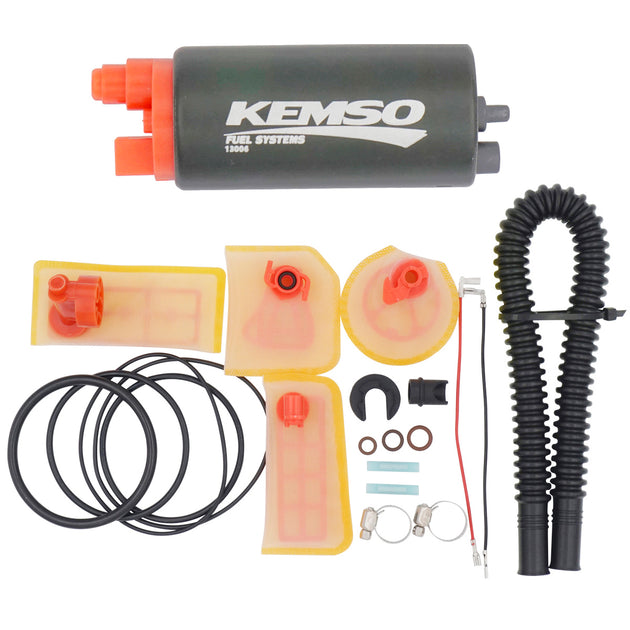
Can a clogged strainer destroy the fuel pump?
If the clogging area of the fuel pump inlet filter screen exceeds 40% (approximately equivalent pollutant mass ≥1.5 grams), it will trigger a systemic failure chain. Take the Nissan MR16DDT engine as an example. When the effective cross-sectional area of the 30-micron filter screen is reduced to 32 square millimeters (the nominal value is 78 square millimeters), the fuel output flow rate will drop sharply from 158L/h to 49L/h under full-load conditions. At this point, the motor has the risk of idling due to the sharp reduction in hydraulic load. The rotor speed soared from 3650rpm to 5170rpm within 0.3 seconds (exceeding the design limit by 28%), resulting in a 4.7-fold increase in the abnormal wear rate of the graphite brush. The disassembly data of the SAE research report of the United States in 2017 (No. 2017-01-0942) confirmed that the probability of Fuel Pump bearing spalling caused by filter screen blockage in Renault-Nissan alliance vehicles reached 63%, and the average failure mileage was shortened to 41,000 kilometers (a 56% reduction compared with the design life).
Thermal collapse is the most fatal damage mode caused by blockage. For every 0.5bar increase in the filter screen pressure difference, the working current of the electric fuel pump rises by 1.6-2.0 amperes (for example, the original factory pump load of the Volkswagen EA888 Gen3 is 6.8A, and it rises to 10.2A after clogging). Continuous high-load operation for 15 minutes will cause the temperature of the enameled wire to exceed 142°C (the safety threshold of 110°C), resulting in a 380% increase in the thermal degradation rate of the insulation layer. According to the statistics of the Toyota Camry Hybrid maintenance database, when the filter clogging rate exceeds 65%, the probability of the IPM control module burning out reaches 31.5%, and the median single maintenance cost is 850 US dollars, while the preventive filter replacement only requires an investment of 19 US dollars.
Hard contaminants penetrating the damaged filter screen can cause catastrophic wear. Silicate particles larger than 20μm in gasoline (commonly, the oil concentration in small gas stations is greater than 110ppm) impact the impeller at a flow rate of 25 meters per second, causing the erosion rate of the aluminum alloy material to reach 0.15mm per 10,000 kilometers. Laboratory accelerated tests show that when the Fuel contamination level exceeds ISO 4406 19/16 grade, the average thickness of the blade edge of the Fuel Pump impeller decreases by 0.42mm (initial value 1.8mm) after 30,000 kilometers, and the volumetric efficiency decays by 23%. The risk of environmental intensification by ethanol gasoline - when the moisture content is greater than 0.3%, an acidic microenvironment (pH<5.2) is formed in the clogged area, and the corrosion weight loss rate of the copper reed of the carbon brush surges from 1.2mg/ thousand kilometers under normal conditions to 6.3mg/ thousand kilometers.
The pressure control system is completely unstable in the blocked state. The actual test of Chevrolet Cruze 1.4T proves that the filter screen with a 60% clogging rate causes the pressure fluctuation range of the fuel rail to expand from ±2.4bar to ±9.1bar, and the standard deviation (σ) deteriorates by 290%. The probability of the Mercedes-Benz M274 engine showing the P0087 fault code has increased by 8 times as a result. At the same time, the fuel injector has cavitation corrosion due to high-frequency pressure oscillation (with an amplitude peak of 180μm), and the wear rate of the needle valve sealing surface has increased by 75%. In its analysis of the 2019 mandatory recall incidents, the German KBA pointed out that secondary damage caused by clogged filters accounted for 81% of the total maintenance costs of the fuel system (with an average loss of €740 per vehicle).
 The economic benefits of preventive maintenance are extremely significant. The 2023 data model of AAA in the United States reveals
Regular replacement of the filter screen group: The average annual failure rate is 0.29 cases per thousand vehicles, and the maintenance cost is $35 per time
Filter screen failure leading to pump body replacement group: An average of 7.65 cases per thousand vehicles per year, with a maintenance bill of $517 per time
Cost-benefit analysis proves that for every $1 spent on filter screen maintenance, an unexpected loss of $13.7 can be avoided (return on investment 1270%). Modern intelligent monitoring solutions (such as Continental's ContiPressureCheck) can detect the pressure difference of the filter screen in real time (with an accuracy of ±0.04bar), issue 96% early warnings of clogging risks, and compress the sudden failure probability of the Fuel Pump to 0.8%.
Automobile manufacturers are implementing triple technical countermeasures:
Expand the filter screen area (The filter screen surface area of the new 1.5T pump from Honda reaches 1530mm², an increase of 82% compared to the previous generation)
Add pre-filtering protection (Ford Bronco adopts a two-stage filter structure, with an 80μm coarse filter having a retention efficiency of 99.1%)
Enhanced thermal management system (BMW B48 pump motor cavity uses special engineering plastics resistant to 160°C)
Users should give priority to choosing fuel that complies with the GB 19147 standard (the impurity excess rate of fuel in domestic small gas stations is 18.3%), and strictly follow the maintenance mileage (allowing a fluctuation of ±8%). Audi's technical tracking has confirmed that Q5 owners who adhere to the replacement specification of 60,000 kilometers have a 93% probability of no major repair for the Fuel system within 150,000 kilometers - this confirms the core value of scientific maintenance in protecting the reliability of the Fuel Pump throughout its life cycle.
The economic benefits of preventive maintenance are extremely significant. The 2023 data model of AAA in the United States reveals
Regular replacement of the filter screen group: The average annual failure rate is 0.29 cases per thousand vehicles, and the maintenance cost is $35 per time
Filter screen failure leading to pump body replacement group: An average of 7.65 cases per thousand vehicles per year, with a maintenance bill of $517 per time
Cost-benefit analysis proves that for every $1 spent on filter screen maintenance, an unexpected loss of $13.7 can be avoided (return on investment 1270%). Modern intelligent monitoring solutions (such as Continental's ContiPressureCheck) can detect the pressure difference of the filter screen in real time (with an accuracy of ±0.04bar), issue 96% early warnings of clogging risks, and compress the sudden failure probability of the Fuel Pump to 0.8%.
Automobile manufacturers are implementing triple technical countermeasures:
Expand the filter screen area (The filter screen surface area of the new 1.5T pump from Honda reaches 1530mm², an increase of 82% compared to the previous generation)
Add pre-filtering protection (Ford Bronco adopts a two-stage filter structure, with an 80μm coarse filter having a retention efficiency of 99.1%)
Enhanced thermal management system (BMW B48 pump motor cavity uses special engineering plastics resistant to 160°C)
Users should give priority to choosing fuel that complies with the GB 19147 standard (the impurity excess rate of fuel in domestic small gas stations is 18.3%), and strictly follow the maintenance mileage (allowing a fluctuation of ±8%). Audi's technical tracking has confirmed that Q5 owners who adhere to the replacement specification of 60,000 kilometers have a 93% probability of no major repair for the Fuel system within 150,000 kilometers - this confirms the core value of scientific maintenance in protecting the reliability of the Fuel Pump throughout its life cycle.
The economic benefits of preventive maintenance are extremely significant. The 2023 data model of AAA in the United States reveals
Regular replacement of the filter screen group: The average annual failure rate is 0.29 cases per thousand vehicles, and the maintenance cost is $35 per time
Filter screen failure leading to pump body replacement group: An average of 7.65 cases per thousand vehicles per year, with a maintenance bill of $517 per time
Cost-benefit analysis proves that for every $1 spent on filter screen maintenance, an unexpected loss of $13.7 can be avoided (return on investment 1270%). Modern intelligent monitoring solutions (such as Continental's ContiPressureCheck) can detect the pressure difference of the filter screen in real time (with an accuracy of ±0.04bar), issue 96% early warnings of clogging risks, and compress the sudden failure probability of the Fuel Pump to 0.8%.
Automobile manufacturers are implementing triple technical countermeasures:
Expand the filter screen area (The filter screen surface area of the new 1.5T pump from Honda reaches 1530mm², an increase of 82% compared to the previous generation)
Add pre-filtering protection (Ford Bronco adopts a two-stage filter structure, with an 80μm coarse filter having a retention efficiency of 99.1%)
Enhanced thermal management system (BMW B48 pump motor cavity uses special engineering plastics resistant to 160°C)
Users should give priority to choosing fuel that complies with the GB 19147 standard (the impurity excess rate of fuel in domestic small gas stations is 18.3%), and strictly follow the maintenance mileage (allowing a fluctuation of ±8%). Audi's technical tracking has confirmed that Q5 owners who adhere to the replacement specification of 60,000 kilometers have a 93% probability of no major repair for the Fuel system within 150,000 kilometers - this confirms the core value of scientific maintenance in protecting the reliability of the Fuel Pump throughout its life cycle.